
Case study · 2026
Brand Intelligence Dashboard
A deck of 47 slides nobody opened became 11 answers people actually use.
01
The problem
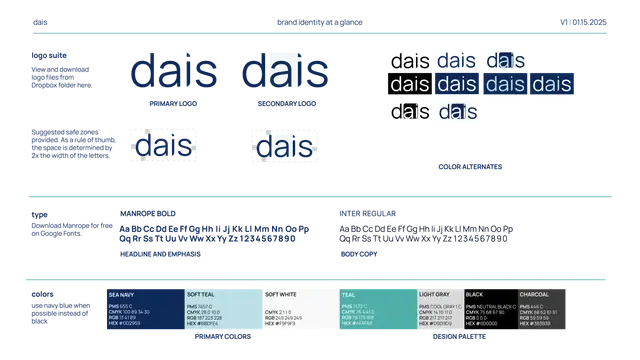
The guidelines existed. That was the problem: they existed in four places, and the newest one was not the one most people had bookmarked.
So every brand decision became an archaeology project. A designer would ask which blue, get three answers, and pick the one from whoever replied first.
02
The strategy
We reframed the deliverable. Nobody actually wants guidelines; they want an answer to a specific question at the moment they are blocked.
That makes the real unit of work a question, not a chapter. We catalogued every brand question asked in Slack over six months, sorted them by frequency, and found that eleven of them covered most of the traffic.
The deck was forty-seven slides. We killed thirty-one, and what was left was the eleven answers and a short note on who decides.
The remaining prose earned its place by explaining why a rule exists, the part a model cannot infer and a new hire most needs.
03
The execution
The tokens, the component registry and the copy rules became structured data rather than prose, so they could be queried rather than read. The prose that survived is the part that explains why a rule exists, which is the part a model cannot infer and a new hire most needs.
Governance came with it: a proposal queue, so drift gets filed rather than argued, and a named decider per category.
04
The outcomes
Brand questions stopped being routed through people. The answer and the reason for the answer arrive together, which means the next person does not have to ask.
The quiet win is the proposal queue. Drift used to surface as a disagreement in review; now it surfaces as a filed change with a reason attached.
05
What it taught
The brief. "Make the guidelines better" was the wrong brief, and we accepted it for two weeks before noticing. The right brief was "make the guidelines answer", and those two briefs build entirely different things.
Eleven questions. Most of the traffic to any body of rules is a handful of questions asked over and over. Answer those properly and the rest of the document can wait, possibly forever.
Named deciders. A governance process with no named decider is a suggestion box. One name per category, written down, and drift gets filed instead of argued in a review.